
1. Introduction
In response to the global climate change, the Paris Agreement set a goal to limit the increase in the global average temperature to well below 2°C above pre-industrial levels and to pursue efforts to limit the increase to 1.5°C. To this end, signatory nations submitted their Nationally Determined Contributions (NDCs) to the United Nations Framework Convention on Climate Change (UNFCCC), outlining their greenhouse gas (GHG) emission reduction plans. To meet their NDCs, countries have primarily been focusing their efforts on production-based mitigation policies, such as expanding renewable energy capacity and improving energy efficiency. Despite these endeavors, global GHG emissions continue to rise and the limitations of production-based policies, notably due to the rebound effects, have become evident [1].
Historical data shows that periods of reduced consumption led to exceptional decreases in GHG emissions, such as during the two oil crises in the 1970s, the 2009 global economic crisis, and the 2020 COVID-19 pandemic [2, 3]. These exceptional reductions were not a result of international mitigation efforts but rather were driven by economic recessions and the subsequent decline in consumption [4]. The repeated observation of GHG emission reductions during economic downturns has fueled increasing policy interest and research into consumption-based mitigation strategies.
The Intergovernmental Panel on Climate Change (IPCC) [5] highlighted the importance of consumption-based GHG reduction through behavioral changes, emphasizing that approximately 58-72% of global GHG emissions are directly or indirectly linked to household consumption. Furthermore, the IPCC [5] projected that changes in lifestyle and consumption behavior resulting from the implementation of consumption-based GHG mitigation policies could potentially reduce global GHG emissions by 40-70%. Similarly, United Nations Environment Programme (UNEP) [6] stated "Individual lifestyle changes are essential to achieving sustainable GHG reduction and bridging the gap between GHG reduction targets and actual emissions." Institute for Global Environmental Strategies (IGES) [7] set targets to achieve the Paris Agreement's 1.5°C goal, suggesting that the average per capita carbon footprint must be reduced to 2.5tCO2eq by 2030, 1.4tCO2eq by 2040, and 0.7tCO2eq. by 2050.
A quantitative assessment of household carbon footprints (HCFs) must precede the establishment and implementation of effective consumption-based GHG mitigation policies. Environmentally Extended Input-Output Analysis (EEIOA), which integrates environmental impacts with the Input-Output table (IOT), is a valuable methodology for analyzing the direct and indirect emissions of pollutants resulting from industrial activities required to satisfy final consumption. It achieves this by utilizing the established Input-Output framework that analyzes the direct and indirect effects of a region's industrial production activities on other industries through intermediate consumption [8]. EEIOA is widely used for carbon footprint assessments at the national, city, industrial sector, organizational, and household levels [9-10]. However, previous domestic studies on HCFs [11-12] have often been limited to analyzing the carbon footprints of restricted populations and consumption categories using survey data, thereby failing to provide a systematic and comprehensive assessment of HCFs.
To address the limitations of prior domestic research and enhance the reliability of carbon footprint analysis, this study employs a high-resolution EEIOA model to analyze HCFs. The study assesses HCFs by twelve consumption categories, including residential energy, transportation, food and non-alcoholic beverages, alcoholic beverages and tobacco, and household goods and services to analyze HCFs hotspots. Furthermore, the carbon footprints of private and government consumption within the national-level carbon footprint are also assessed. The findings are synthesized to derive policy implications for consumption-based GHG mitigation.
2. Literature review
The carbon footprint is the total amount of direct and indirect GHG emissions released throughout the entire supply chain during the production of consumed goods and services, thus including Scope 1, Scope 2, and Scope 3 emissions [13]. This is also referred to as consumption-based GHG emissions. It differs from production-based GHG emissions, which represent the direct GHG emissions (Scope 1 emissions) that occur within a country's territories during the production of goods or services, such as those accounted for in national GHG inventories.
While there is no universally accepted international standard or methodology for calculating the carbon footprint, research for academic purposes and policy formulation is active, leading to the proliferation of policies that reflect these findings. For instance, in 2022, Sweden became the first country in the world to legislate a consumption-based GHG reduction target, setting a goal to achieve net-zero consumption-based emissions by 2045 [14].
The EEIOA is the primary tool utilized for calculating the carbon footprint. EEIOA evaluates the direct and indirect environmental impacts of economic activity by utilizing the Input-Output table, which is a statistical framework that records all transactions involved in the production and disposal of all goods and services within a region over a certain period, following established principles and formats [15]. Similar to Life Cycle Assessment (LCA), EEIOA can be used to assess various environmental impacts, including global warming, water use, and land use. This study focuses exclusively on the impact of global warming.
Since Leontief [16] published related research, EEIOA has been extensively applied in diverse fields of carbon footprint research. Studies by Park et al. [17], Hertwich and Peters [18], and Yu et al. [19] analyzed national-level carbon footprints, and the results from national-level assessments have also been used to analyze the effect of carbon leakage through international trade[20]. Furthermore, research analyzing the carbon inequality across different income groups and regions has been conducted based on the calculation of HCFs [3, 21-22].
HCFs analysis has been utilized to identify high HCFs consumption areas (hotspots) and draw policy implications for effective consumption-based GHG mitigation[7, 18, 23-24]. The results of many studies generally concur that residential energy, transportation, and food constitute the primary hotspots for HCFs [18,23-24]. However, the proportion these three categories occupy within the total HCFs varies among studies. Hertwich and Peters [18] and Ivanova et al. [23] reported thee combined share to be between 55%~65% based on analyses of European and North American households. In contrast, Long et al. [24], analyzing HCFs for 52 cities in Japan, reported that the carbon footprints for residential energy, food, and transportation accounted for 50.2%, 19.8%, and 11%, respectively, resulting in a combined share of 81.0%, which is higher than the findings for European or North American countries.
Domestic research concerning HCFs remains highly limited, and systematic studies utilizing EEIOA are scarce. Kim and Kim [11] analyzed the residential sector carbon footprint through a citizen survey. They calculated GHG emissions by multiplying the usage of electricity, city gas, water, kerosene, and LPG by corresponding emission factors, subsequently comparing the residential carbon footprints between single-person and multi-person households. Similarly, Myung [12] analyzed HCFs for 1,000 citizens, but limited the scope to consumption areas for which emission calculation is relatively straightforward, such as heating, electricity, water usage, waste discharge, and transportation mode usage.
Domestic studies share limitations. They rely on surveys of limited populations, which inhibits the assessment of HCFs representative of the entire national household population. Furthermore, the analyzed consumption scope is restricted to a few areas, failing to assess the HCFs across the entire consumption categories. The calculation method itself, based on multiplying usage by emission factors, also presents a limitation in that it inadequately assesses Scope 3 emissions.
To overcome the limitations of existing domestic studies, this research systematically analyzes HCFs using EEIOA. Specifically, the high-resolution EEIOA model employed in this study was developed to maintain consistency between the GHG emission structure by sector, driven from the national GHG inventory, and the economic structure between sectors, driven from the IO table. This ensures that the calculated HCFs accurately reflect the overall national GHG emission structure. Furthermore, by using household consumption expenditure statistics from the Household Income and Expenditure Survey, which ensures representativeness for the entire national household population, this study guarantees the representativeness of the calculated HCFs. By analyzing the carbon footprints across all household consumption areas, this research aims to present a comprehensive analysis of HCFs by consumption category.
3. Method and data
This study analyzed HCFs using the high-resolution EEIOA model (Equation 1) developed by Lee et al. [25], utilizing the 2020 non-competitive IOT. The model is specifically structured to calculate four components of emissions: the carbon footprint of domestic products, the carbon footprint of imported intermediate goods, the carbon footprint of imported final goods, and the direct emissions from household fossil fuel use.
Where, E: HCFs, ĉ: sectoral GHG intensity, (I-Ad)-1: domestic Leontief Inverse matrix, Am: Import intermediate input coefficient matrix, Yd: expenditure on domestic goods, Ym: expenditure on imported goods, Edir: direct GHG emissions.
The first term of Equation (1), ĉ(I−Ad)−1Yd, can be further expanded as shown in Equation (2). The first term of the expanded expression, ĉYd, represents the direct (Scope 1) emissions directly caused by household consumption expenditure. Subsequent terms represent the sum of indirect emissions (Scope 2 and 3 emissions) resulting from the ripple effect of consumption expenditure across various economic sectors. Therefore, the carbon footprint calculated using Equation (1) comprehensively includes Scope 1, Scope 2, and Scope 3 emissions attributable to household consumption expenditure.
This study utilized the microdata from the 2020 Household Income and Expenditure Survey (HIES). The HIES is a statistical survey conducted by Statistics Korea to provide data necessary for measuring and analyzing changes in national income and consumption levels. The survey targets a sample of 7,200 households selected using a two-stage stratified cluster sampling method, with the entire household population as the sampling frame, and is conducted annually.
Sample households record their income and expenditure details monthly in a prescribed household account book, which is then collected by Statistics Korea to compile and publish quarterly and annual statistics. The HIES, which was reorganized in 2019, broadly investigates household characteristics, income, and expenditure. Household characteristics includes information on housing such as type of dwelling, tenure status, deposit, living area and household members like number of members, occupation, gender, industry of employment. Income includes current income and non-current income. Expenditure includes consumption expenditure and non-consumption expenditure. The consumption expenditure items are classified into 12 major categorizes according to the UN's COICOP (Classification of Individual Consumption according to Purpose) classification system. These major categories are further subdivided into 97 medium divisions and 357 consumption items.
The micro data corresponding to the medium divisions from the 2020 HIES results for all households were employed. Input data for the HCFs analysis included socioeconomic information, such as weights, number of household members, age of the household head, and income, along with the monetary consumption expenditure amount for each expenditure item.
4. Results
The average HCFs in 2020 was calculated to be 12.41tCO2eq.. When examined by emission source, the carbon footprint stemming from the consumption of domestically produced goods and services was 8.28tCO2eq., constituting 66.7% of the total HCFs(Fig. 1(a)). Direct GHG emissions resulting from household fossil fuel consumption for heating, cooking, and vehicle operation accounted for 3.52tCO2eq.(28.4%). The HCFs from imported intermediate goods and imported final goods were found to be minor.
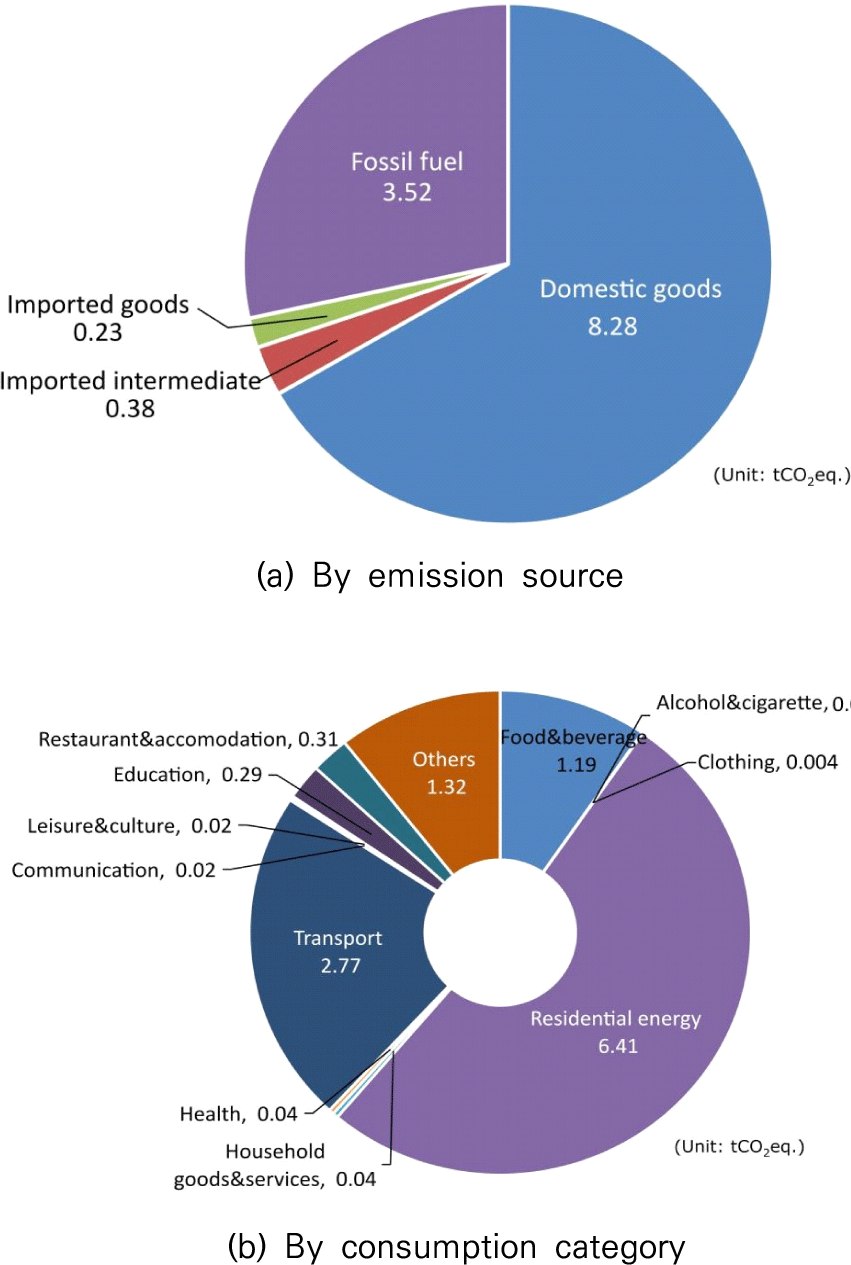
To identify the emission hotspots, HCFs were analyzed by consumption category(Fig. 1(b)). The residential energy carbon footprint was the largest, at 6.41tCO2eq.(51.6%). Transport followed at 2.77tCO2eq.(22.3%). Together, the carbon footprints related to household energy consumption (residential energy and transport) accounted for a dominant 73.9% of the total HCFs. The household energy carbon footprint (9.17tCO2eq.) is substantially larger than the direct GHG emissions from household fossil fuel use (3.52tCO2eq.) because it includes Scope 2 emissions from electricity and heat use (4.24tCO2eq.) within residential energy, as well as Scope 3 emissions from transportation services (0.72tCO2eq.) and other supply chain effects. The next largest consumption category was food and non-alcoholic beverages, with a carbon footprint of 1.19tCO2eq.(9.6%). The combined share of these top three consumption categories (residential energy, transport, and food/non-alcoholic beverages) was 83.5% of the total HCFs.
The finding that residential energy, transport, and food constitute the HCFs hotspots is broadly consistent with previous studies [18, 23-24], bearing the closest resemblance to the case of Japan. South Korea's combined share of these three consumption areas (83.5%) was slightly higher than, but not significantly different from, the findings of Long et al. [24]. The higher proportion of these three consumption areas in South Korea compared to the results of Hertwich & Peters [18] and Ivanova et al. [23] is attributable to the significantly higher share of South Korea’s residential energy carbon footprint (51.6%) compared to European countries (14.2%-24.8%). This disparity is likely due to the large residential energy consumption by Korean households, particularly for heating. The high proportion of Scope 2 emissions (electricity and heat) within South Korea's residential energy carbon footprint indicates a relatively high emission factor for electricity and heat, which stems from the high reliance on fossil fuels in the nation's energy mix.
The substantial share of the carbon footprint associated with energy use (73.9%) was similar with the energy sector's share in the national inventory (76.4%). This suggests that energy consumption is high in both the industrial and household sectors. Furthermore, it implies the urgent necessity of not only household efforts to reduce energy consumption but also the parallel need to lower the electricity emission factor through the transition to renewable energy to effectively reduce HCFs.
Korea's per capita carbon footprint, which was calculated by dividing HCFs by number of household members. was 5.17tCO2eq. in 2020. This level is lower than that of Finland or Japan but higher than developing countries such as China, Brazil, and India(Fig. 2). This result generally aligns with previous studies showing a positive correlation between per capita carbon footprint and per capita GDP [23]. This relationship arises because higher per capita GDP typically leads to increased household disposable income, which in turn results in larger housing areas, increased vehicle driving distance, and more air travel, thus boosting the carbon footprint in the residential, transportation, leisure, and service sectors [7].
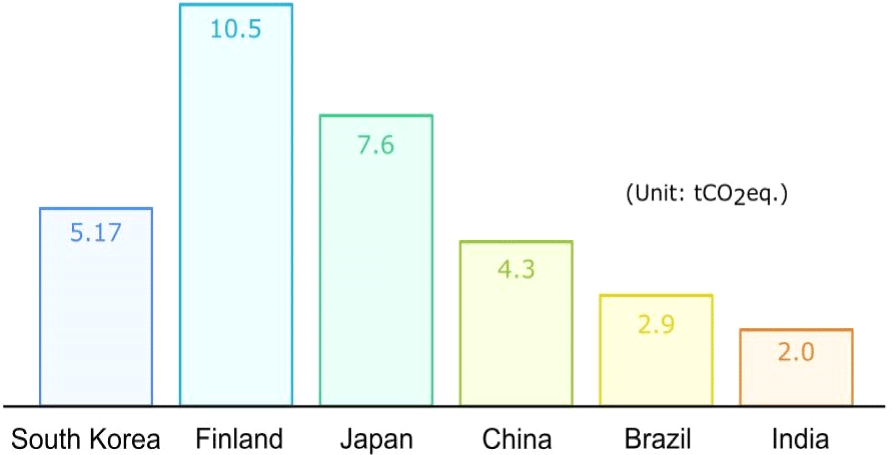
The 2020 per capita carbon footprint (5.17tCO2eq.) shows a significant gap when compared to the individual carbon footprint reduction targets set by the Paris Agreement. Achieving the 2030 target (2.5tCO2eq) requires a 51.6% reduction, while achieving the 2050 target (0.7tCO2eq.) requires an 86.5% reduction.
South Korea's per capita carbon footprint is only 40.4% of the production-based per capita emission (12.8tCO2eq.), which is calculated by dividing national GHG inventory emission by population. This disparity suggests that the South Korean economy has a high export share in GHG-intensive industries such as steel, petrochemicals, and semiconductors. The findings indicate that reducing South Korea's GHG emissions cannot rely solely on reducing the consumption carbon footprint but must be complemented by production-based mitigation efforts, including the decarbonization of energy systems and major industries.
To ascertain the proportion of the consumption carbon footprint, the national-level carbon footprint was also analyzed(Fig. 3). The share of consumption, investment, and exports in the national-level carbon footprint showed significant differences compared to their respective contributions to the GDP. In 2020, the carbon footprint share of consumption was 38.3%, which was 11.1%p lower than its contribution to GDP (49.4%). This discrepancy is partly attributed to the impact of the 2020 pandemic, which led to an increase in service consumption, which has a smaller carbon footprint, while consumption of manufactured goods, which have a larger carbon footprint, decreased.
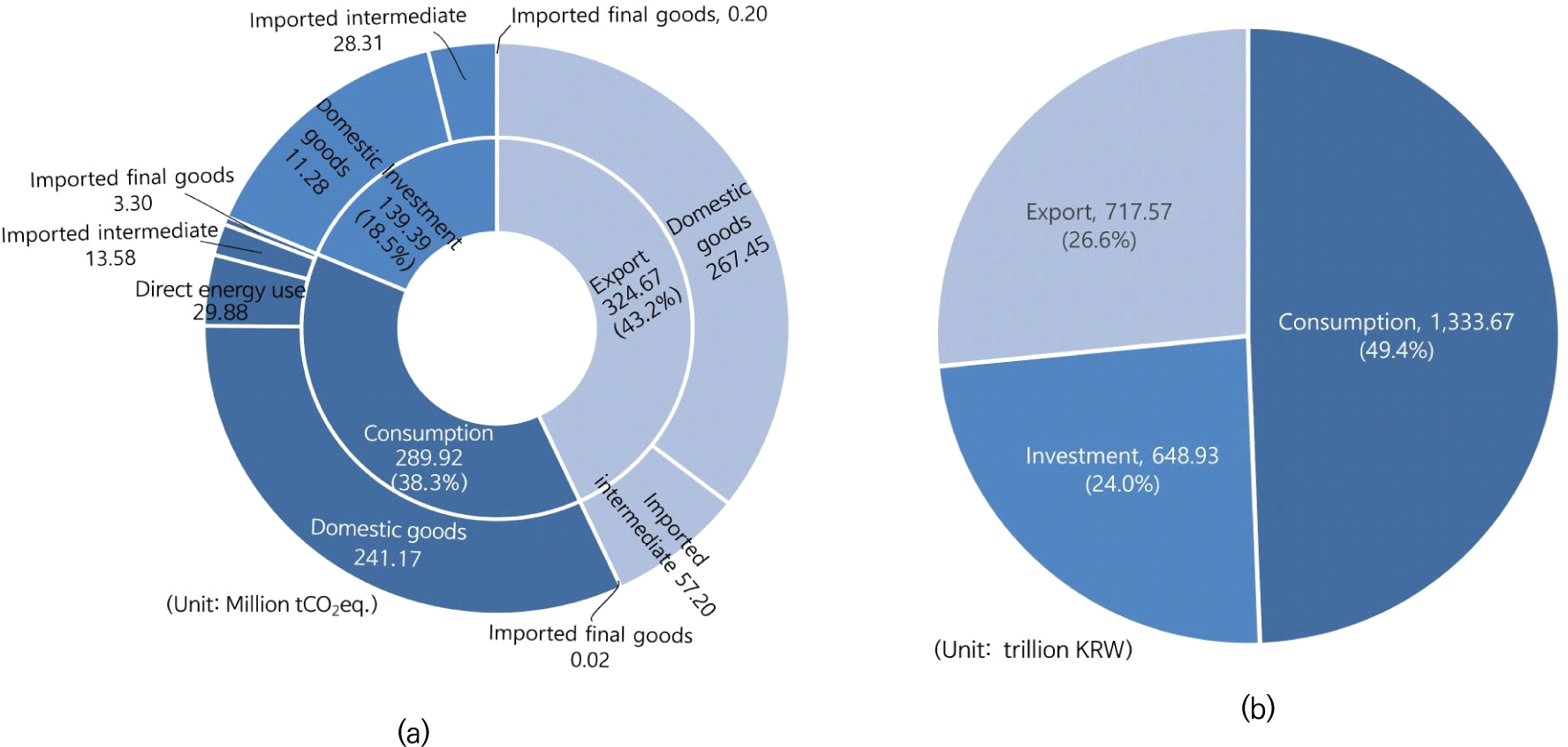
In contrast, exports had a GDP contribution of 26.6% but accounted for the highest share among all final demand in the carbon footprint, at 43.0%. This high share of export in carbon footprint reflects the structure of the South Korean industry, which is heavily focused on highly GHG-intensive sectors like petrochemicals and steel, as well as major export industries like automobiles, shipbuilding, electronics, electric equipment, and machinery that rely on the products of those high-GHG sectors as raw or intermediate materials.
5. Conclusion
This study systematically analyzed HCFs using a high-resolution EEIOA model developed based on comprehensive domestic data, including the IOT, energy balance data, and the national GHG inventory. The significance of this research lies in its systematic assessment of HCFs across the entire spectrum of household consumption, utilizing national statistical data, unlike previous domestic studies that were limited to assessing only specific consumption areas.
The per capita carbon footprint in 2020 was found to be 5.17tCO2eq, which presents a substantial gap when compared to the individual carbon footprint reduction targets necessary to meet the goals of the Paris Agreement. To achieve the 2030 target (2.5tCO2eq) requires a 51.6% reduction, and to reach the 2050 target (0.7tCO2eq.) requires an 86.5% reduction.
The analysis confirmed that energy consumption (residential energy and transport) accounts for a dominant 73.9% of the HCFs, indicating the urgency of reducing the carbon footprint associated with household energy use for effective consumption-based GHG mitigation. The reason the energy carbon footprint is larger than the direct emissions from household fossil fuel use is the addition of Scope 2 emissions from the use of electricity and heat, and Scope 3 emissions from transportation services and their supply chains. The high proportion of Scope 2 emissions for electricity and heat within the household energy carbon footprint is attributed to the high ratio of fossil fuels in the domestic energy mix, resulting in higher emission factors for energy, particularly electricity, compared to European nations or Japan. This finding suggests that a critical task for reducing household energy carbon footprints is not just energy saving efforts within households, but also the urgent necessity of lowering the emission factor for energy, especially electricity, through the transition to renewable or carbon free energy sources.
The per capita carbon footprint (5.17tCO2eq.) accounted for 40.4% of the production-based per capita emissions (12.8tCO2eq.) and was similar to the consumption share of the national-level carbon footprint (38.0%). This result implies that the emissions attributable to household consumption are smaller than those resulting from industrial activities for both Korea's consumption-based and production-based GHG emissions. Therefore, the findings suggest that relying solely on GHG reduction through changes in consumer consumption patterns has limitations for overall GHG abatement. Instead, it underscores the necessity of implementing decarbonization efforts in the energy conversion sector and industrial sectors in conjunction with consumption-side policies.
We acknowledge limitation that suggests future research avenues. The EEIOA model excludes certain highly carbon-intensive activities associated with international aviation and ocean transport because the national GHG inventory, which the model is based on, does not cover these emissions. This systemic exclusion potentially leads to an underestimation of the HCFs. Future research should aim to integrate specialized sectoral data to capture these emissions.


