
 PDF Download
 PubReader
 Export Citation
 Email the Author
 Share Facebook
 Share Twitter
 Cited by 0 Article
 Metrics (View:1,470)






1. Introduction
The severity of global warming and climate change has made carbon neutrality a global imperative. To reduce carbon emissions, countries, including Europe, are promoting legislation to reduce plastic use and strengthen the circular economy. A circular economy aims to minimize resource waste and promote resource circulation by recycling the raw materials of discarded products. This is a crucial task that the current generation must address to ensure a sustainable future for future generations.
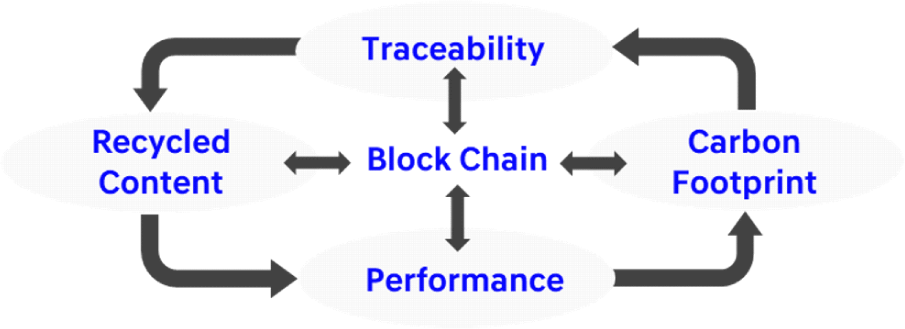
The transition to a circular economy is increasing the need for identification and tracking technologies based on initial use and recycling information for plastics. Greenwashing,the practice of making products appear eco-friendly (Green + Washing: intentional or unintentional disguise and market disruption in the recycled materials supply chain), is becoming a major issue. For example, loopholes in documentation or third-party certification methods for claiming a certain amount of recycled materials are exploited to deceive consumers and cause market disruption. Therefore, fundamental concepts and analytical methods for identifying and quantifying plastic materials are urgently needed[1].
The core of the plastic circular economy lies in manufacturing products by mixing recycled plastic materials derived from waste plastic with virgin plastic materials. A scientific and reliable certification method that accurately identifies the content of recycled plastic in a product is essential for environmental regulatory oversight. However, without clear verification of the source, it is difficult to confirm whether recycled plastic materials actually originate from waste plastic products and their content.
Currently, various systems exist to certify recycled plastic materials. Korea has introduced the GR (Good Recycled) certification system. This system guarantees the quality of products made from recycled materials and verifies the percentage of recycled materials, allowing manufacturers to label their products accordingly. Internationally, there are certification systems such as the ISCC (International Sustainability and Carbon Certification) PLUS and the GRS (Global Recycled Standard). ISCC PLUS uses a mass balance method to calculate the percentage of bio-based and recycled materials, while GRS verifies the source and content of recycled materials in textiles and plastic products.
However, many systems rely on self-reporting provided by applicant companies, leaving the certification process reliant on indirect evidence. This creates a situation where the actual source of recycled materials cannot be directly verified. This limitation creates a risk that companies may exaggerate or provide misleading information about their use of recycled materials. Therefore, the introduction of advanced certification methods that can more precisely and transparently verify the source and content of recycled plastic materials is needed.
Marker technology for authenticating recycled plastics plays a crucial role in solving these problems. By inserting marker additives into recycled plastic materials, detecting them through specialized analysis, and comparing the marker's identification code against a database, the source and content of the recycled material can be accurately identified. This serves as a basis for determining whether the material can be distributed normally and used in the manufacture of intermediate and final consumer goods, or returned to the manufacturer for content adjustment.
Currently, marker technology and special analysis technology are not at a level that can be applied industrially, and this study is the first result of its kind in Korea. Specifically, it is a method that utilizes fluorescent substances as markers, and in particular, utilizes the spectrum that changes depending on conditions as a special analysis technology. Fluorescent substances tend to decrease in fluorescence when they change from a dilute solution state to an aggregation state. This phenomenon is called aggregation-caused quenching (ACQ). Conversely, some specific phosphors exhibit higher photoemission efficiency in the aggregated or solid state than in the solution state, a phenomenon called aggregation-induced emission (AIE)[2].
Typically, fluorescent materials exhibiting the AIE phenomenon possess chemical structures with intramolecular rotational or vibrational freedom. In low-concentration solutions, molecules consume energy through rotational or vibrational motion rather than emitting it as light. However, as the concentration of the substance increases and the molecules aggregate or crystallize, molecular motion becomes restricted, resulting in a fluorescent material with high luminescence efficiency.
This study utilizes the aforementioned fluorescence principles and fluorescent materials to propose 1a simulation experiment design for quantifying the content of recycled plastics and 2a fluorescence-based quantification method. Furthermore, using this fundamental methodology, we aim to present the first method for identifying and quantifying the content of recycled automotive plastic materials.
2. Research Method
Plastic waste is a massive global problem, with over 350 million tons of plastic produced worldwide each year. However, end-of-life considerations for these plastics are rarely considered. As of 2023, the global recycling rate for mass-produced plastics is estimated at 9%, with significant regional variation. For example, in the United States, the plastic recycling rate is estimated at 8-10%, while in Europe, approximately 35% of post-consumer plastic waste is sent to recycling facilities, 42% to energy recovery facilities, and 23% to landfills. Data on plastic recycling is more widely reported and known in developed countries, but less so in developing countries. In developed countries with collection and sorting infrastructure, plastic recovery rates are likely to exceed utilization.
This has led to a push in the European industrial sector to increase the recycled content of products. While several attempts are being made to develop methods for sorting and measuring recycled content, they are still in their infancy and a complete solution has yet to be developed.
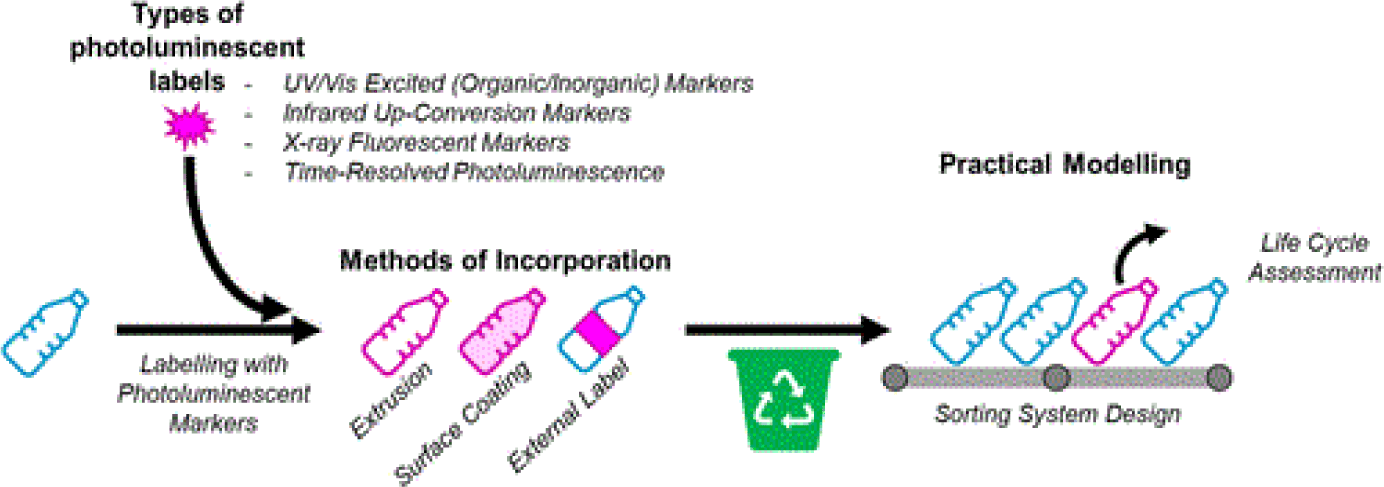
Difficulties in sorting plastic waste often lead to contaminated waste streams that can reduce the value of recyclables and hinder reprocessing. Therefore, improving plastic waste sorting can improve the quality of recycling and enable the circularity of plastics. Labeling technology is one way to enhance the sorting of plastic recyclables. Phosphorescent - based labeling concepts, including organic and inorganic phosphorescent markers and infrared X-ray fluorescent markers, are shown in Fig. 2. Integrating labels within packaging, such as extrusion, surface coating, and integration into external labels, are possible. Furthermore, several practical models for implementing certain sorting technologies have been proposed. However, while labeling can be effective in the recycling sorting process, its quantification after mixing with virgin materials is limited.
Molecules that exhibit fluorescent properties are candidates for identifying specific plastic waste streams. This idea, first proposed by Luttermann, has recently gained increasing attention. The unique emission wavelengths of specific compounds could provide a method for identifying and separating waste plastics without interfering with existing sorting technologies. Examples of fluorescent labeling agents, which utilize the principle of fluorescence to form marker systems, are shown in Fig. 3[3].
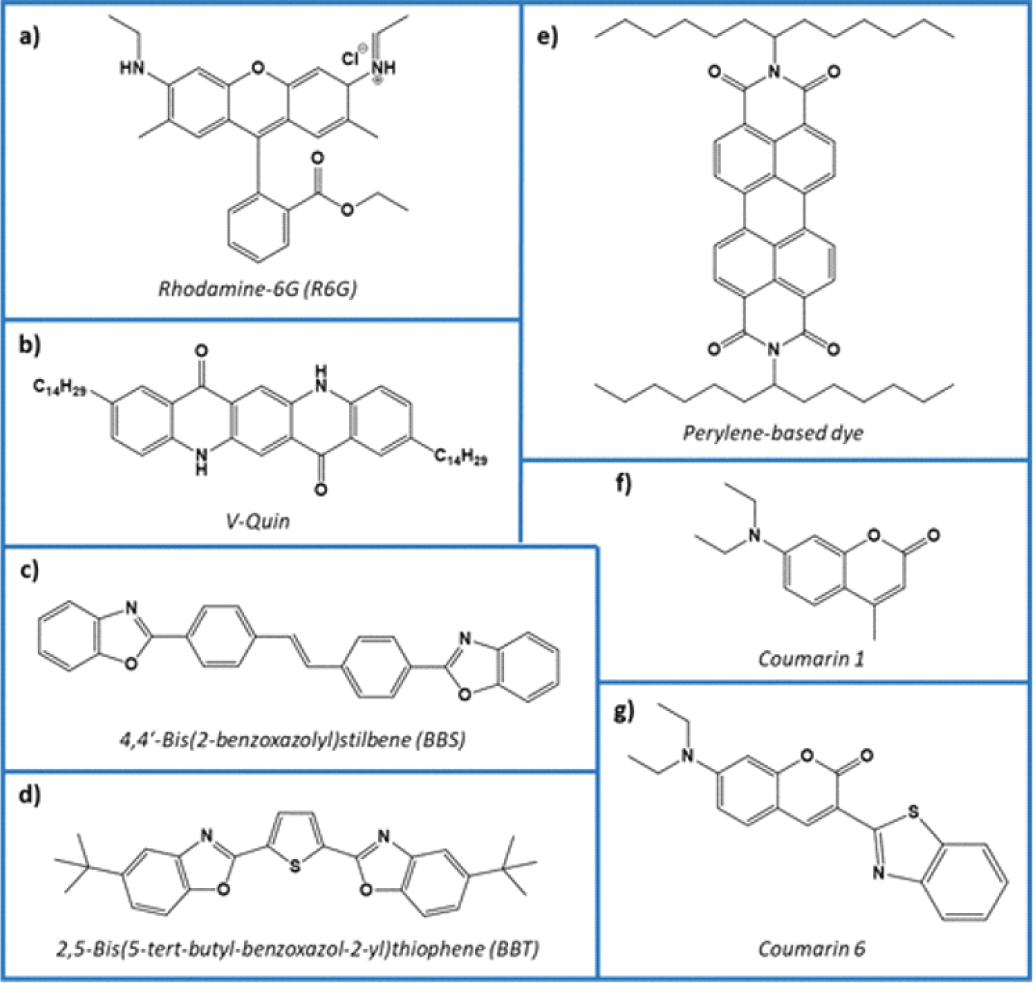
In particular, (C) stilbene substances are known as aggregation-induced luminescence (AIE) substances. Stilbene is a colorless crystalline hydrocarbon that is a dye and an optical whitening agent,and refers to any of the unsaturated hydrocarbon groups containing two benzene rings. It is a compound with two phenyl groups attached to an ethylene group, and stilbene derivatives are used in the production of dyes and pigments. 4,4'-Bis(2-benzoxazolyl) stilbene (abbreviated as BBS, hereinafter referred to as BBS) is a type of optical whitening agent. It has a high melting point and excellent heat resistance, so it is mainly used in processes requiring high temperatures, and can be used in particular for the fluorescent whitening of polyester fibers, polyacyl, nylon, and other plastic products. In addition, while general optical whitening agents are somewhat sensitive to light, BBS has the characteristic of not being greatly affected by long-term exposure to light. It is an organic compound represented by the condensed structural formula C6H5CH=CHC6H5. It is characterized by a central ethylene moiety with one phenyl group substituent at each end of the carbon-carbon double bond. (Melting temperature: 300 oCorhigher)4,4'-Bis(2-benzoxazolyl)stilbene (BBS) is a well-known fluorescent dye and optical brightener used in polymers and textiles, characterized by high thermal stability and strong fluorescence. While it is generally robust, it does undergo trans–cis photoisomerization upon UV light exposure, particularly in solution. Despite its light-induced transformation in solution, BBS is widely used as a brightener in plastics (polyester, polypropylene) because it maintains its performance properties under industrial and environmental conditions[4].
When mixed and blended with automotive polymer materials, it is necessary to verify whether the cohesive luminescence phenomenon occurs and to explore and derive the correlation between the fluorescent substance (BBS) content and the fluorescence measurement results. To this end, a simulation test design was derived as follows. A master batch of BBS and polymer materials with a specific content is manufactured, and then the mixing ratio of this master batch and virgin material is set to 10 to 100 wt %. If a difference in fluorescence emission characteristics occurs in each composition, a method for quantifying the recycled content can be designed using this information, as shown in Fig. 4. Specifically, it is a method that utilizes the correlation between fluorescence-based characteristics (emission wavelength).
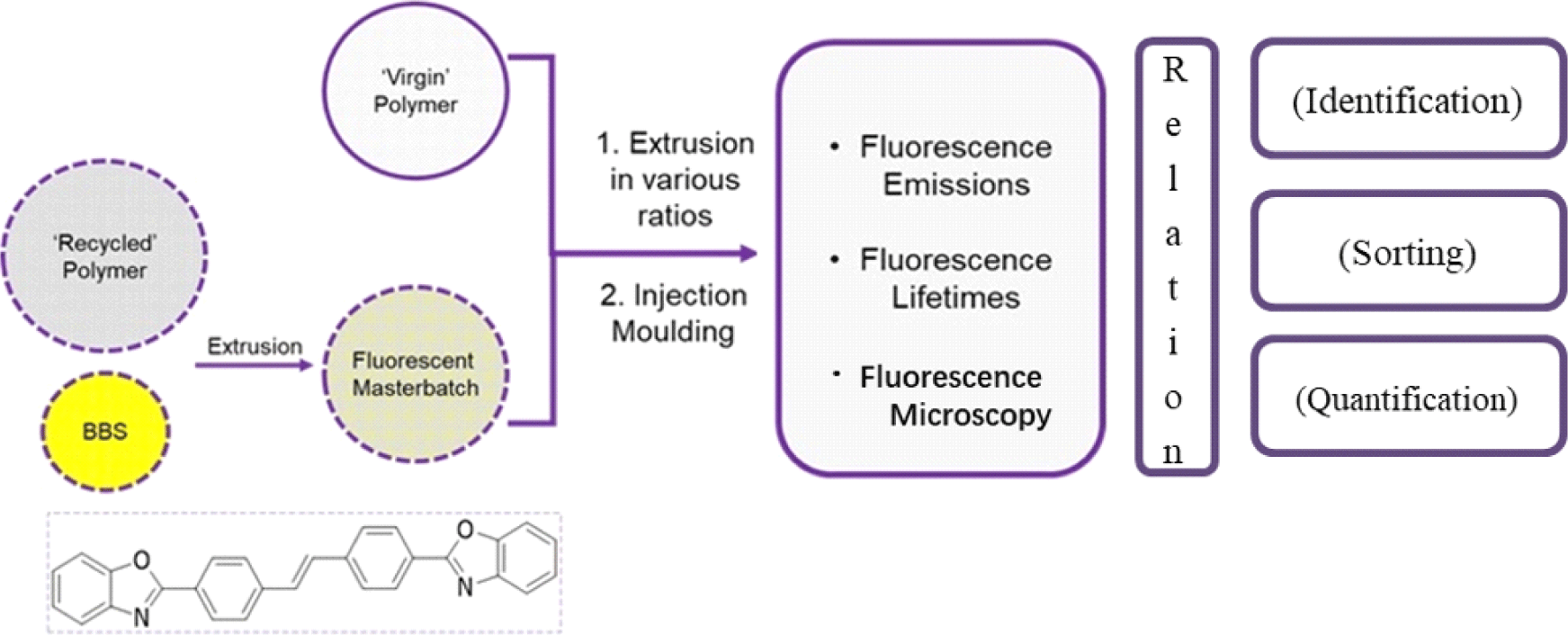
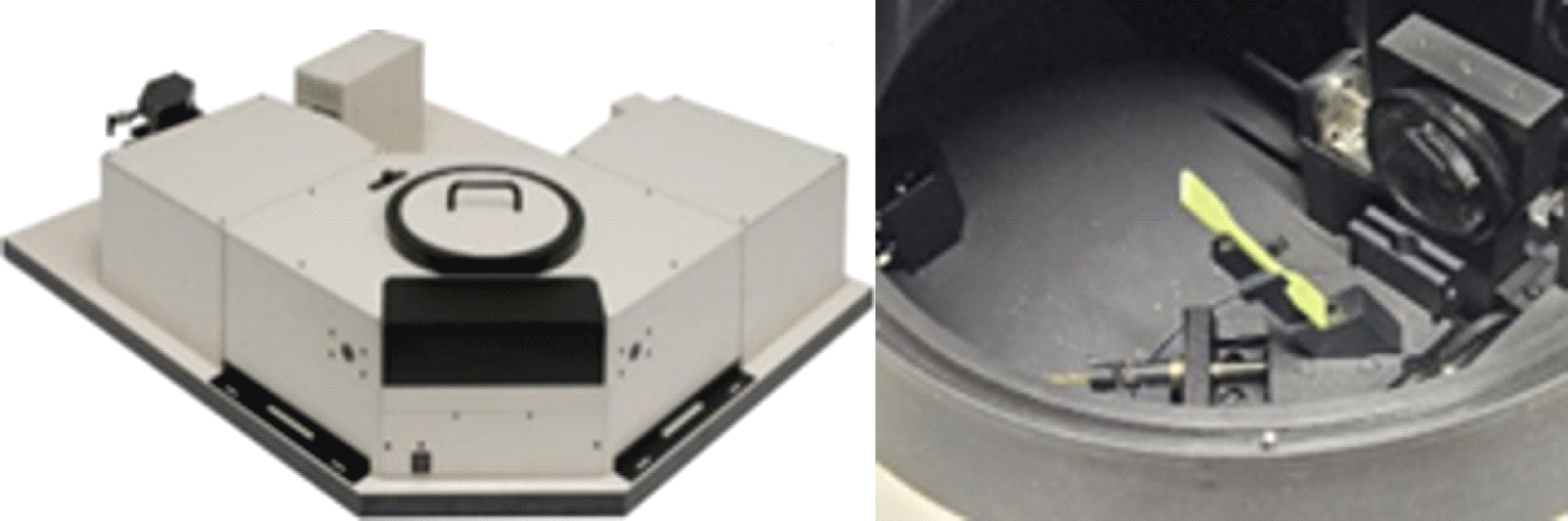
A concentrated masterbatch (cMB) (BBS/polymer) was manufactured using a twin-screw extruder , and then the cMB was diluted with virgin polymer using a twin-screw extruder. The cMB was mixed and extruded at a ratio of 10 to 100% with respect to the virgin polymer, and a content simulation experimental plan was established. Polymer materials applied as interior and exterior materials for automobiles were divided into three groups and grouped as shown in Table 1. The final composite containing BBS at the above ratio matches the ratio of recycled materials (10 to 100%), and at the same time, each composition contains BBS at each concentration. After injection molding the extrudate, the fluorescence emission spectrum was measured using the equipment shown in Fig. 5[5,6,7].
| Gr.1 | Gr.2 | Gr.3 | |
|---|---|---|---|
| Type | PP, PP/talc(20wt%) | PA6/GF (30wt%) PA66/GF (30wt%) |
PC, ABS,PC/ABS |
| Application | Interior, exterior | Engine,chassis | Interior, exterior |
In order to understand the characteristics of BBS, the solvent-phase fluorescence characteristics were investigated, and the results are shown in Table 2. The absorption and luminescence characteristics of the material dispersed in the solvent (2-Propanol, Ethyl acetate) were as follows. The maximum absorption was observed around 340–370 nm, and the dependence on the solvent characteristics was not high. In addition, the fluorescence emission wavelength showed a characteristic wavelength of 350–370 nm under low-concentration solution conditions and 400–530 nm under increased concentration conditions. From this, the fluorescence spectrum experimental conditions were set to an absorption range of 340 nm and an emission range of 350–600 nm, and the experiment was conducted.
| Wavelength | |
|---|---|
| Λabs (Max) | Absorption Maximum Centered Around 340~370 Nm |
| Λem | 400, 430, 450 Nm |
The fluorescence spectrum evaluation conditions for each plastic composition group and BBS combination are as shown in Table 3.
3. Results and Discussion
Each combination contains 10 samples, for a total of 7 combinations containing 70 individual samples. Fluorescence spectra were evaluated for 10 samples from each combination, and the results are shown in Fig. 6.
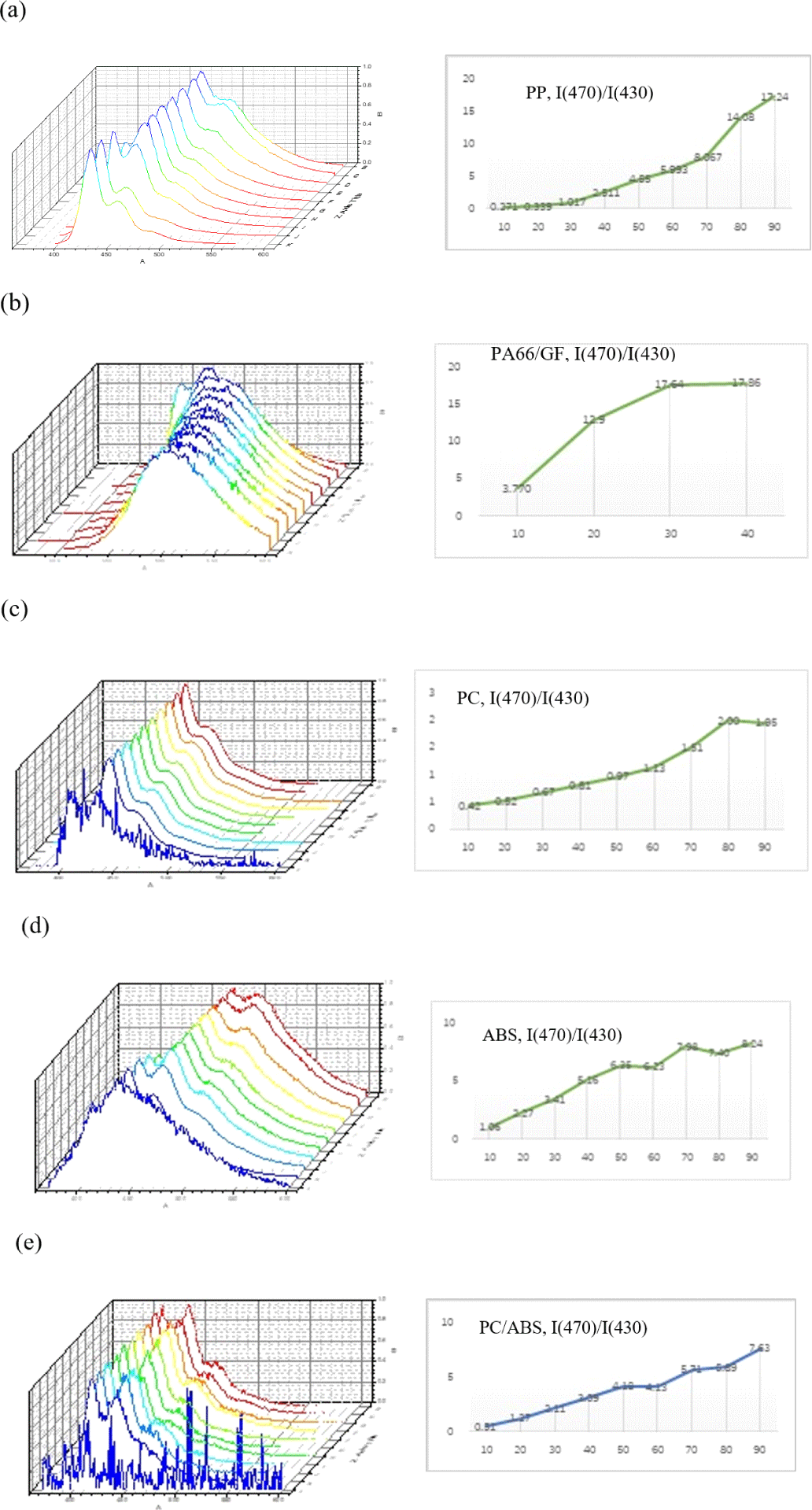
First, although the BBS material is identical, we found that the fluorescence spectrum shapes differ depending on the polymer material. Specifically, the spectral shapes of the general-purpose resin polypropylene, the engineering plastic nylon, and the amorphous polycarbonate or ABS (acrylonitrile-butadiene-styrene) all differ. This suggests that the BBS material can be utilized as a tool for sorting and separating processes in the recycled plastic cycle.
Plastics recycling is an important component of the circular economy. In mechanical recycling, the recovery of high-quality plastics for subsequent reprocessing requires plastic waste to be first sorted by type, color, and size. Such sortation of plastic objects at Materials Recovery Facilities (MRFs) relies increasingly on automated technology. Critical for any sorting is the proper identification of the plastic type. Spectroscopy is used to this end, increasingly augmented by machine learning (ML) and artificial intelligence (AI)[8].
Second, to quantify the recycled content, detailed data analysis was performed to derive a concentration quantification method using the intensity ratio of specific wavelengths in the fluorescence spectrum. As a result, a method was derived using the ratio of peak intensities at 430 nm and 470 nm. Calculating the fluorescence intensity values at two different wavelengths as a ratio showed a linear relationship with the recycled content ratio (10–100%). The theoretical principle of this method is ratiometric fluorescence, which quantifies the concentration using the intensity ratio of specific wavelengths in the fluorescence spectrum. This method is particularly effective in compensating for non-uniform external factors such as sample thickness, light source instability, and device efficiency. Fig. 6 shows, on the left each graphes, the X-axis represents the wavelength range, the Y-axis represents the recycled content (10–100%), and the Z-axis represents the normalized intensity of a specific wavelength. Graphes on the right, derived by calculating R from this data is a linear quantification graph (X-axis: recycled content, Y-axis: R value).
PP is the most widely used material for automobile parts, and the fluorescent material BBS was directly dispersed into PP through melt extrusion. To determine the concentration range, the minimum concentration PP-BBS spectrum was converted to a fluorescence spectrum. As a result, it was found that quantification was possible when BBS 0.2 wt% was adopted as the masterbatch manufacturing condition.
PA6,66/GF (30 wt%) is the most widely used material for automotive engine chassis components, and the fluorescent material BBS was directly dispersed into PA6,66/GF through melt extrusion. To determine the concentration range, the minimum concentration PA6,66/GF-BBS spectrum was used as a fluorescence spectrum. As a result, it was derived that it is possible under the BBS 1.0 wt condition as the masterbatch manufacturing condition. In addition, by reprocessing the masterbatch into virgin polymer, extruding and diluting, a simulation recycled content ranging from 10 to 100% recycled plastic content was produced, and the content line based on this was derived.
PC, ABS, and PC/ABS are amorphous polymer materials used as interior and exterior parts of automobiles. The fluorescent material BBS was directly dispersed into the polymer through melt extrusion. To determine the concentration range, the minimum concentration spectrum was used as a fluorescence spectrum. As a result, it was deduced that the BBS 1.0 wt condition was feasible under the masterbatch manufacturing conditions. In addition, by reprocessing the masterbatch into virgin polymer, extruding, and diluting, a simulation of recycled content ranging from 10 to 100% of recycled plastic content was produced, and a content line based on this was deduced.
Overall, we were able to obtain differentiated spectral shapes (digital data, graph shapes) for each combination of plastic and fluorescent material (BBS). This means that it can be used as a method for plastic identification and classification. This is the first result that suggests the applicability of fluorescence as a method for identification and classification, which is the primary goal of this study, prior to quantification, and suggests the possibility of expanding it to an automated classification system. Furthermore, these data indicate that the incorporation of fluorescent material BBS does not have a detrimental effect on plastic properties or chemical fingerprints. This technology is compatible with existing plastic recycling infrastructure without modification and has the advantage of minimizing costs compared to uncertain verification methods such as existing mechanical property evaluation or rheological property comparison.
Fluorescence imaging methods not only add another methodology for quantification, but also extend the application of the fluorescence spectral concept to previously inaccessible conditions. By evaluating fluorescence images of unknown mixed samples, they can be compared to known standards, such as universal reference materials (standard content images). This allows for rapid, real-time determination of recycled content or for quality control checks by manufacturers. Rapid inspection is crucial, as it allows industries to quickly verify the distribution and source of recycled content.
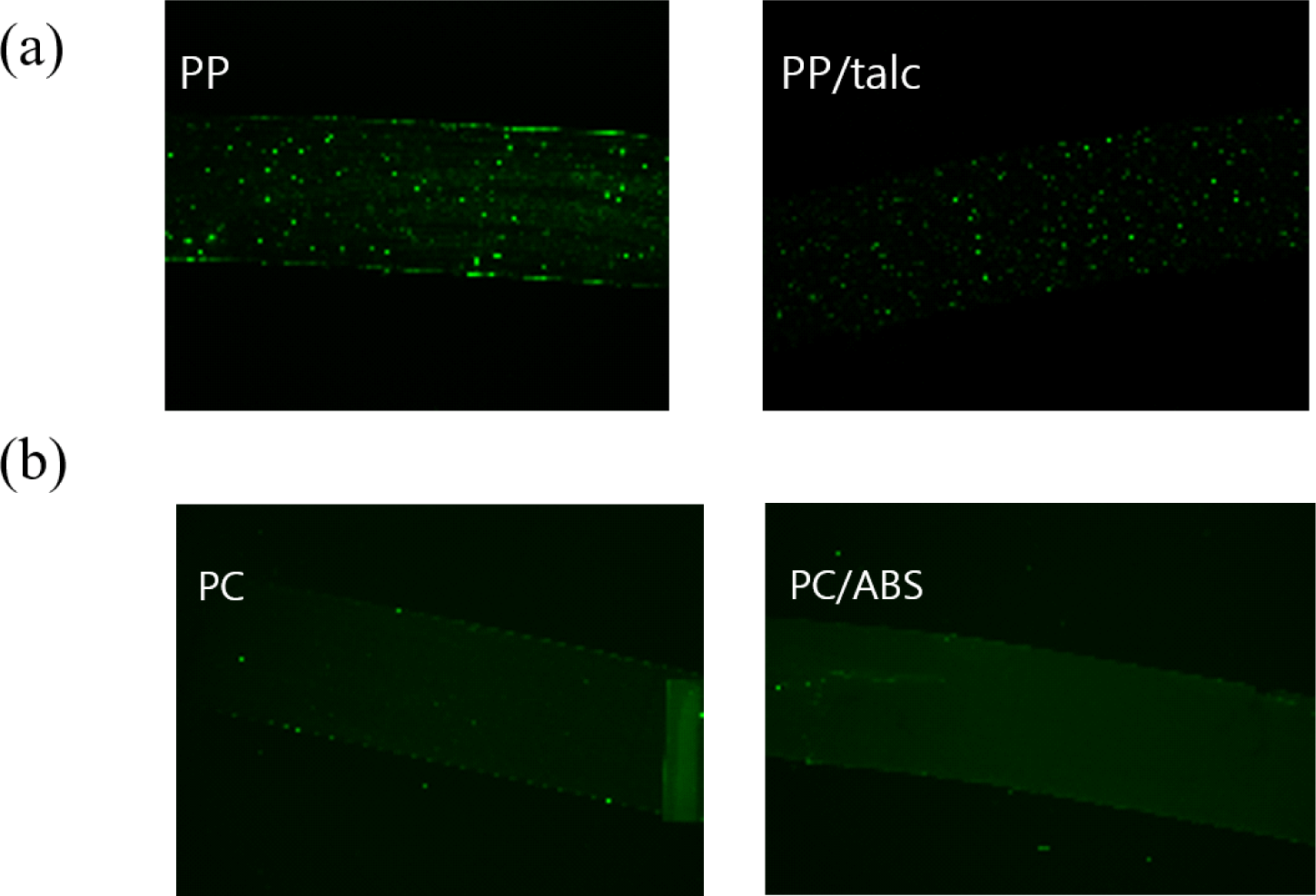
The accuracy of this technique is related to the fabrication of microtomed thin-section specimens and the accuracy of fluorescence images. It was found that room-temperature thin-section fabrication was possible for all polymer materials handled in this study and fluorescence images were derived for each combination.
Fig. 7 shows the results of only some of the combinations evaluated in this study. Specifically, a threshold was set to separate the image background and BBS dots, and the BBS dotswere imaged by changing them to bright areas and the background to dark areas. In particular, in the case of pure PP without talc addition, data normalization (normalization to the number of dots per unit area) was derived from BBS 0.02 wt%, and for composites containing talc 20 wt%, normalization was derived from BBS 0.2 wt%. This means that the phenomenon of hindering the emission of fluorescent substances in talc composites is mainly due to the fluorescence quenching and optical shielding phenomena. Talc is a filler used to improve stiffness and reduce cost in polymer composites, but it was experimentally confirmed that it reduces the fluorescence efficiency when mixed with a fluorescent substance. That is, in calculating the amount of fluorescent substance added to a talc composite, talc is a silicate mineral of Mg3(OH)2Si4O10 and has hydroxyl groups (–OH) on its surface, so it can adsorb organic fluorescent substances. When a fluorescent substance is adsorbed on the surface of talc, the energy transfer method changes or a non-radiative transition is promoted, preventing fluorescent light from being emitted. Therefore, deriving the minimum amount is very important.
Natural talc often contains impurities-most notably iron oxide, hematite, magnetite, pyrite, and magnesium carbonates like dolomite/magnesite. These impurities, particularly iron, act as efficient quenching agents, significantly reducing or inhibiting the photoluminescence (fluorescence) emission of organic dyes or fluorescent additives in the composite [9].
On the other hand, in the case of amorphous polymers, it was derived that normalization was possible starting from BBS 0.1 wt%. This is an important result, as crystalline polymers (semi-crystalline) and amorphous polymers (amorphous) have a large difference in free volume due to the difference in molecular arrangement structure. The main difference is that crystalline polymers have a small free volume due to regular packing, and amorphous polymers have a large free volume due to irregular structures . Therefore, experimentally deriving the minimum loading in the design of the fluorescent material content loading of amorphous polymers (such as PC, ABS, and PS) is a key process for reducing costs while maintaining the physical properties of the product, and the experimental results were presented in this study.
4. Conclusion
This presents an independent method, aggregation-induced fluorescence, for identifying and tracking the content of recycled plastics experimentally simulated. This approach stems from the growing need to address greenwashing issues arising from plastic recycling, and the need to develop a long-term identification and tracking process methodology, particularly in automotive plastic supply chains such as the EU EVL.
-
1) An identification, tracking, and quantification system based on the BBS-based aggregation-induced fluorescence principle has the potential to be developed in a way that allows for standardization of recycled content and could be one way to increase supply chain participants' confidence in recycled plastics.
-
2) The simplicity of this method offers practical advantages over approaches like digital marking. While theoretically richer in information, digital marking requires updating and is typically only applicable to a single component at each stage of the product lifecycle. In this context, identification and tracking technologies using fluorescent materials can be a very useful industrial alternative.
-
3) This technology is expected to be an option for establishing and supporting a recycling method for automotive plastics through the commitment and implementation of automotive parts supply chain participants and the establishment of an open data platform. This layered quantification process is expected to play a key role in minimizing negative suspicions among suppliers, users, and consumers regarding the content of recycled plastics and ensuring reliability between the supply chain and waste stream. Furthermore, this methodology is expected to serve as a means of addressing mandatory data verification requirements in the European Union by establishing a supply chain-wide inspection and assessment method and promoting compliance through simplicity.


